

Managing technology across multiple locations requires more than fixing problems as they arise. For mid-sized businesses, maintaining reliable performance, secure systems, and consistent user experiences across every office can quickly overwhelm internal IT resources. The right IT support strategy helps keep operations running smoothly by providing proactive maintenance, fast issue resolution, and continuous system monitoring across all locations.
Whether through fully outsourced or co-managed IT services, businesses can improve efficiency, strengthen security, and create a more consistent technology environment company-wide. Centralized cybersecurity, expert support, and standardized IT management like SolidBase IT offers can help reduce downtime, protect critical data, and free internal teams to focus on strategic initiatives that drive growth. As your organization expands, reliable multi-site IT support becomes essential for maintaining productivity and supporting long-term success.

Why Multi-Site Mid-Sized Firms Need Reliable IT Support Services
Managing technology across multiple locations can be challenging for mid-sized businesses with lean IT teams. Each site often has its own mix of users, devices, internet connections, cloud applications, and security requirements, making it difficult to maintain consistent performance and support across the organization.
When IT support falls behind, the consequences extend far beyond minor technical issues. Slow response times, increased downtime, security vulnerabilities, and inconsistent user experiences can disrupt operations, reduce productivity, and impact both employee and customer satisfaction. As businesses grow and add locations, these challenges only become more difficult to manage.
Technology plays a critical role in supporting growth, but expanding organizations often find their internal IT teams overwhelmed by routine support requests and day-to-day maintenance. As a result, valuable time and resources are pulled away from strategic initiatives that help the business move forward.
That’s where the right IT strategy can make all the difference. Many organizations turn to outsourced, co-managed, or hybrid IT support models to gain the expertise, scalability, and proactive support needed to keep operations running smoothly. SolidBase IT helps growing businesses reduce complexity, strengthen security, and maintain consistent technology performance across every location. In this guide, we’ll explore the key IT support services and strategies that help multi-site organizations stay productive, secure, and prepared for future growth.
What to Look for in IT Support for Multi-Site Businesses
1. Look for: Unified IT Visibility and Control
Businesses operating across multiple locations benefit significantly from a centralized IT management approach. With the right support infrastructure in place, IT teams can monitor, manage, and secure every site through a single platform. This centralized visibility provides a clear view of network performance, connected devices, and potential issues across the organization, helping ensure consistent IT operations no matter where employees are located.
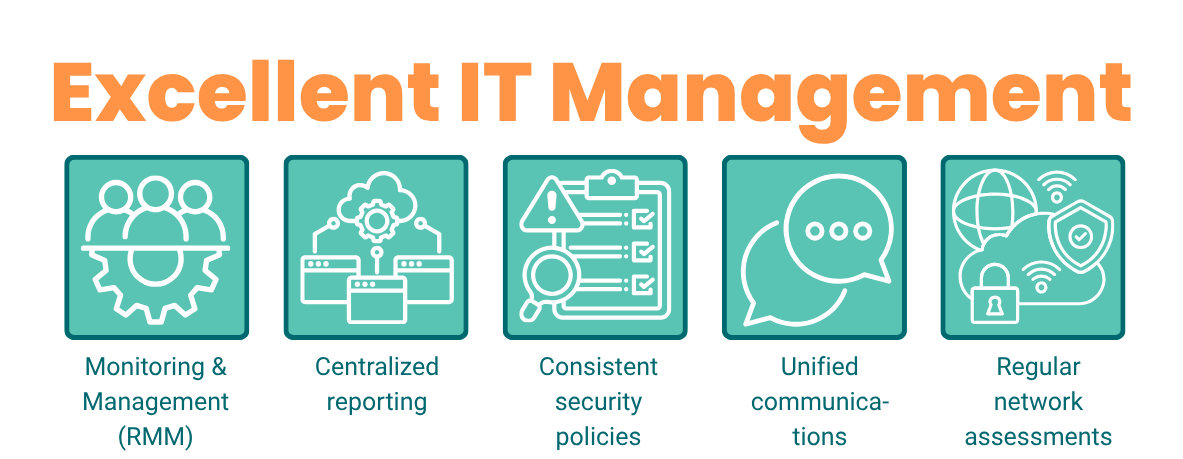
Effective multi-site IT management relies on standardized tools, proactive monitoring, and ongoing oversight. Reliable IT support services should include remote monitoring and management (RMM), centralized reporting, consistent security policies, unified communications, and regular network performance assessments. Together, these capabilities help reduce downtime, strengthen security, and create a more consistent user experience across all locations. The result is greater operational control, improved efficiency, and an IT environment that can scale alongside business growth.
2. Look For: Fast Response Times & Reliable Support
When your business operates across multiple locations, waiting hours, or even days, for technical support simply isn’t an option. Every minute of downtime can impact productivity, disrupt communication between teams, and create frustrating experiences for both employees and customers. That’s why multi-site organizations need responsive, dependable IT support that resolves issues quickly and keeps day-to-day operations running without interruption.
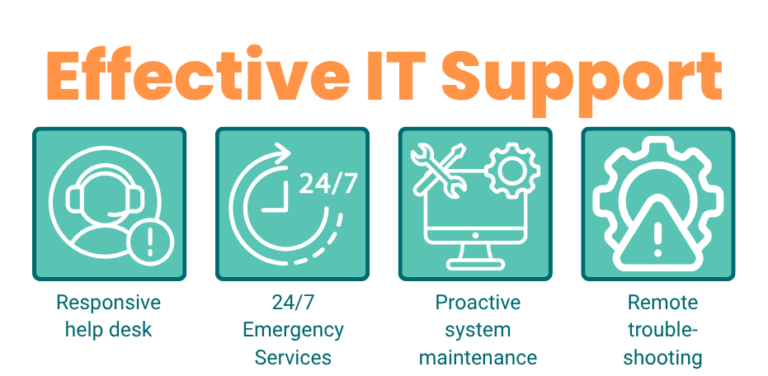
Supporting technology across several locations requires more than a reactive approach. Effective IT support services should include a responsive help desk, 24/7 emergency assistance, proactive system maintenance, and remote troubleshooting capabilities. These services help identify and resolve issues before they escalate, reduce downtime, and minimize operational disruptions across every site.
For many growing organizations, partnering with an outsourced or co-managed IT provider delivers additional value. By offloading routine support tasks and around-the-clock monitoring, internal IT teams can spend less time firefighting and more time focused on strategic initiatives that support business growth. The result is a more reliable technology environment, improved user experiences, and the confidence that every location has access to the support it needs when it matters most.
3. Look for: Flexible IT Support for Expanding Businesses
As businesses grow, their technology requirements grow right alongside them. Adding new employees, devices, applications, and locations can quickly increase complexity, making it more difficult for internal IT teams to maintain performance, security, and user satisfaction. Scalable IT support provides the flexibility organizations need to expand confidently while keeping systems reliable and operations running smoothly.
A growth-focused IT strategy should include cloud infrastructure management, support for remote and in-office employees, device lifecycle management, network expansion, and efficient software deployment. These services help ensure technology can adapt to changing business needs without creating disruptions or placing additional strain on internal resources.
For small and mid-sized businesses with multiple locations, scalable IT support creates a strong foundation for long-term success. It enables organizations to embrace new technologies, onboard employees more efficiently, and expand into new markets while maintaining a consistent technology experience across every location.
4. Look For: Advanced Cybersecurity Protection
Businesses with multiple locations face a larger and more complex cybersecurity threat landscape. Every office, connected device, remote employee, and cloud application creates another potential entry point for cybercriminals. Without a strong security strategy in place, organizations are at greater risk of cyberattacks, ransomware incidents, data breaches, and operational disruptions that can impact productivity and profitability.
For multi-site organizations, cybersecurity is not optional. It is a critical part of maintaining business continuity and protecting valuable company data. A reliable outsourced or co-managed IT provider should deliver comprehensive security services, including endpoint protection, network security, email security, identity and access management, data backup and recovery, and 24/7 threat monitoring. These proactive measures help identify and address potential risks before they become costly problems.
By implementing consistent cybersecurity protections across every location, businesses can reduce risk, safeguard sensitive information, minimize downtime, and maintain secure, uninterrupted operations. Just as importantly, leaders gain confidence knowing their technology environment is protected against evolving threats while supporting the needs of a growing organization.
5. Look for: Strategic Co-Managed and Hybrid IT Support
As mid-sized businesses expand across multiple locations, technology demands often outgrow the capacity of lean internal IT teams. Managing user support, cybersecurity, system maintenance, network performance, and new technology initiatives can quickly become overwhelming. As a result, IT staff may spend more time resolving day-to-day issues than focusing on strategic projects that support business growth.
Co-managed and hybrid IT support models help address this challenge by combining internal IT resources with outsourced expertise. While the terms are often used interchangeably, there is a key difference:
- Co-managed IT is designed to supplement an existing IT team, providing additional expertise, resources, and support while internal staff maintain day-to-day oversight.
- Hybrid IT support offers a more flexible approach, allowing businesses to divide responsibilities between internal teams and outsourced providers based on their specific needs. For example, an organization may keep infrastructure management in-house while outsourcing cybersecurity, help desk services, or network monitoring.
Both models give organizations the flexibility to retain control of their technology environment while gaining access to specialized expertise, scalable resources, and around-the-clock support. Internal teams can focus on strategic initiatives, technology planning, and business-critical projects, while external IT professionals handle routine support, proactive monitoring, cybersecurity management, and system maintenance.
For multi-site businesses, this collaborative approach creates a consistent IT experience across every location while reducing the strain on internal resources. It also helps organizations respond more quickly to issues, strengthen security, and scale technology support as the business grows.
Benefits of Co-Managed and Hybrid IT Support
- Extend the capabilities of lean internal IT teams
- Reduce workload and prevent IT staff burnout
- Access specialized expertise and advanced technology resources
- Improve help desk responsiveness and issue resolution times
- Strengthen cybersecurity through proactive monitoring and management
- Scale support as new users, devices, and locations are added
- Maintain greater control and visibility than a fully outsourced model
- Free internal teams to focus on long-term business and technology goals
By combining internal knowledge with external expertise, co-managed and hybrid IT support models provide a practical, scalable way for growing businesses to improve technology performance, support multiple locations, and prepare for future growth without overstretching their IT teams.
6. Look for: Comprehensive Managed IT Operation
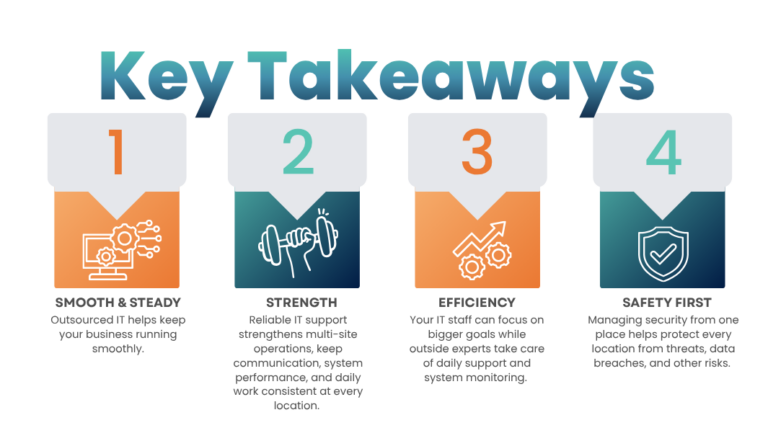
For mid-sized businesses with limited internal IT resources, managing technology across multiple locations can be both time-consuming and complex. Fully outsourced IT support allows organizations to hand off some or all their IT responsibilities to a trusted managed service provider (MSP), ensuring their technology remains secure, reliable, and well-maintained without the need for a large in-house team.
By partnering with an experienced IT provider, businesses gain access to comprehensive technology support, proactive system management, continuous monitoring, and expert guidance. This approach helps reduce the day-to-day burden on employees and leadership teams, allowing them to focus on core business operations while IT professionals handle infrastructure, support requests, cybersecurity, and ongoing maintenance.
Benefits of Fully Outsourced IT Support
- Reduce internal workload and operational costs
- Gain predictable IT costs with a consistent service model that simplifies budgeting
- Benefit from proactive monitoring and issue prevention
- Improve system reliability, performance, and infrastructure management across all business locations
- Access enterprise-level technology expertise, tools, and resources without the cost of building and maintaining a large internal IT department
For multi-site organizations, fully outsourced IT support provides the consistency, scalability, and expertise needed to keep every location connected and productive. With a dedicated team managing your technology environment, businesses can reduce downtime, strengthen security, and position themselves for sustainable growth.
Final Thoughts on Choosing the Right IT Support Provider
Managing technology across multiple locations becomes increasingly complex as businesses grow. For organizations with lean IT teams, maintaining consistent performance, security, and support across every site can quickly stretch internal resources. That’s why many mid-sized businesses turn to outsourced or co-managed IT services to gain the expertise, scalability, and proactive support needed to keep operations running smoothly.
Choosing the right IT support provider is about more than resolving technical issues. A trusted IT partner helps reduce downtime, strengthen cybersecurity, improve system performance, and deliver consistent support across all locations. With fast response times, proactive management, flexible service options, and strategic guidance, the right provider can help your business stay secure, efficient, and prepared for future growth.
By investing in reliable IT support, multi-site organizations can simplify technology management, empower their internal teams, and build a scalable IT foundation that supports long-term success. With SolidBase IT as a trusted partner, businesses can gain the responsive, proactive support needed to keep every location secure, connected, and ready to grow.
Frequently Asked Questions
IT support services are necessary for multi-site companies in order to secure ongoing operations, strengthen connections between locations, minimize downtime, improve cybersecurity, and effectively manage technology across various offices.
Think of co-managed IT as an extension of your existing team. It’s a model where your internal IT staff partners with an external provider to split the workload. Outside experts help pick up the slack on daily troubleshooting, cybersecurity, and infrastructure upgrades, giving your team extra hands without fully outsourcing your department.
A good IT partner should build a multi-layered defense around your business. Instead of just fixing things when they break, they ought to provide active network and email filtering, secure your team’s devices, and monitor your systems around the clock for threats. Crucially, they also need to handle your data backups and recovery planning, ensuring a cyberattack won’t take your entire operation offline.
Businesses should look for providers with experience in multi-site IT management, fast response times, scalable service options, strong cybersecurity expertise, active monitoring, and co-managed IT support capabilities.
Outsourced IT support helps lean internal IT teams by handling daily technical issues, monitoring systems, and providing specialized expertise, allowing internal staff to emphasize strategic business and technology initiatives.
Co-managed IT support works alongside internal IT teams, while fully outsourced IT support allows an external provider to handle most or all IT operations and technical management.

- Splashtop: How to Manage IT Support Across Multiple Locations
- Forbes: 5 Data-Backed Ways Outsourcing Can Quickly Improve Your Profitability
- Outsource Solutions Group: Why Proactive IT Support Is the Key to a Reliable and Secure Business
- Acrisure: In-House IT vs. Managed IT Services: Which Is Right for Your Business?