

Why Mid-Sized Businesses Are Turning to Help Desk Outsourcing
As organizations grow, managing technology becomes increasingly complex. Mid-sized businesses with 50 to 500 employees often find their internal IT teams overwhelmed by rising support requests, cybersecurity concerns, and the need to maintain a secure, reliable technology environment. What works for a smaller company can quickly become difficult to scale as users, devices, applications, and infrastructure expand.
Common Challenges Include:
- Increasing help desk ticket volumes
- Limited IT staffing and specialized expertise
- Rising cybersecurity and compliance requirements
- Supporting hybrid and remote employees
- Managing a growing number of devices and software platforms
- Finding time for strategic IT planning and improvement initiatives
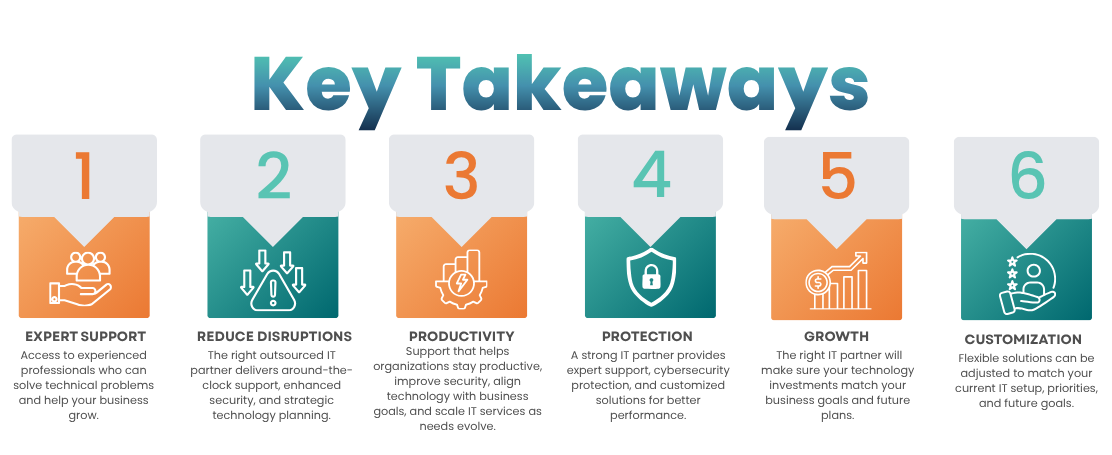
Help desk outsourcing offers a cost-effective solution without the expense of continually adding internal staff. By partnering with a managed IT services provider, businesses can maintain fast response times, improve the employee support experience, and gain access to a broader range of technical expertise. This allows internal IT teams to shift their focus from routine troubleshooting to higher-value projects that support long-term business goals.
Many organizations work with providers to supplement their existing IT resources, creating a scalable support model that grows alongside the business. The result is often a more efficient IT operation, improved user satisfaction, and greater capacity for strategic planning and innovation.
What Is Help Desk Outsourcing?
Help desk outsourcing is the practice of partnering with a managed IT service provider (MSP) to handle day-to-day technical support, troubleshoot IT issues, manage devices, and assist employees with technology-related requests. Instead of relying solely on in-house resources, businesses gain access to experienced IT technicians, established support processes, and responsive help when they need it most. For growing organizations, outsourced help desk services can improve response times, reduce downtime, and help employees stay productive. It also provides more predictable IT expenses and allows internal teams to focus on strategic initiatives rather than routine support tasks. At companies like SolidBase IT, help desk outsourcing is often used to supplement existing IT resources, giving businesses the flexibility to scale support as their technology needs evolve.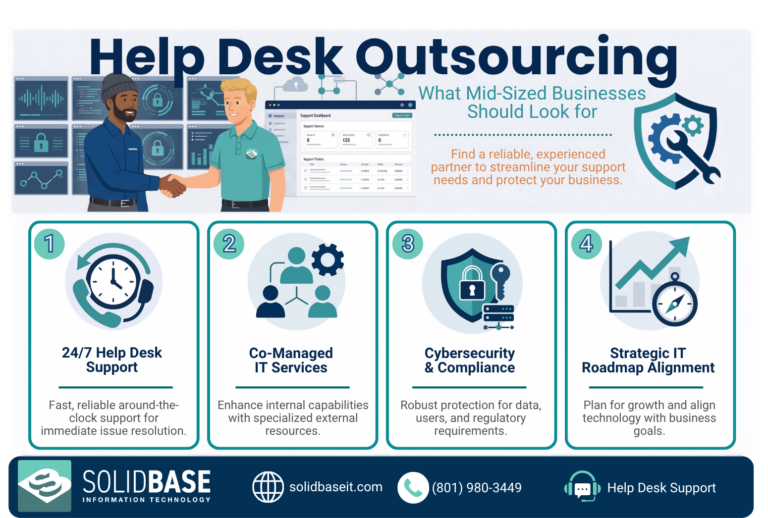
What to Look for in a Help Desk Outsourcing Company
Choosing the right help desk outsourcing company can significantly impact employee productivity, cybersecurity, and long-term business growth. While many providers offer technical support services, not all deliver the same level of expertise, responsiveness, or strategic value. The best partners do more than resolve tickets. They help businesses scale efficiently while aligning IT support with broader business goals.
1. Real 24/7 Help Desk Support
Technology issues do not always happen during business hours. Employees need reliable assistance whenever problems arise, whether they are working in the office, remotely, or across multiple time zones.
Look for a provider that offers:
- 24/7 service desk availability
- Multiple support channels, including phone, email, and chat
- Fast response and resolution times
- Clear escalation procedures
- Remote troubleshooting capabilities
Around-the-clock support helps minimize downtime, improve employee satisfaction, and keep business operations running smoothly.
2. Co-Managed IT Services
Many mid-sized businesses already have an internal IT team but need additional resources to manage growing technology demands. A provider that offers co-managed IT services can strengthen existing capabilities without replacing in-house staff.
Key co-managed IT services may include:
- Supplementing internal IT resources
- Managing overflow support tickets
- Providing specialized technical expertise
- Assisting with infrastructure and cloud projects
- Delivering strategic IT guidance
This flexible approach allows organizations to scale support as needed while maintaining control of their internal IT operations. Providers such as SolidBase IT often work alongside internal teams, helping businesses balance daily support needs with larger technology initiatives.
3. Cybersecurity and Compliance Expertise
Cybersecurity should be integrated into every help desk engagement rather than treated as a separate service. As cyber threats continue to evolve, businesses need support teams that understand both security best practices and compliance requirements.
Look for providers that can assist with:
- Security monitoring and threat detection
- Endpoint protection
- Identity and access management
- Patch management and system updates
- Compliance support and reporting
- Security awareness training for users
Organizations operating in regulated industries should prioritize partners with experience supporting applicable compliance standards and industry-specific security requirements.
4. Strategic IT Roadmap Alignment
The most effective help desk outsourcing providers do more than solve technical issues. They help businesses plan for future growth and make technology decisions that support long-term success.
A strategic IT partner should help organizations:
- Plan future technology investments
- Improve infrastructure reliability and performance
- Support digital transformation initiatives
- Maximize IT budget efficiency
- Align technology strategies with business objectives
When IT planning is connected to overall business goals, organizations can make proactive decisions that support growth rather than simply reacting to day-to-day challenges.
Expert Insight: Mid-sized businesses often achieve better long-term outcomes when outsourced IT support is part of a broader IT strategy rather than a standalone help desk function. A provider that understands both daily support operations and future technology planning can help reduce technical debt, improve operational efficiency, and prepare the business for sustainable growth.
The Importance of Customized IT Support
No two businesses have the same technology environment. Each organization has unique workflows, support requirements, security concerns, and growth objectives. That’s why the most effective help desk outsourcing providers avoid one-size-fits-all solutions and instead tailor their services to fit each client’s specific needs.When evaluating outsourced IT support, look for providers that customize their services based on:
- Company size and structure
- Industry-specific requirements
- Compliance and regulatory obligations
- Existing internal IT resources
- Business goals and priorities
- Future growth plans
Experienced providers often work closely with clients to develop support strategies that complement existing technology investments and business objectives. The result is a more efficient, cost-effective IT environment that helps employees stay productive and allows leadership to focus on strategic growth initiatives.
Why This Matters
Customized IT support isn’t just about solving technical issues. It’s about creating a support model that fits your business, improves operational efficiency, strengthens security, and scales alongside your organization’s evolving needs.
Final Thoughts
Choosing the right help desk outsourcing provider involves more than comparing costs and response times. The best partners combine reliable technical support with proactive cybersecurity, flexible co-managed IT services, and a long-term approach to technology planning. By evaluating both immediate support capabilities and strategic expertise, businesses can select a provider that delivers lasting value rather than simply resolving day-to-day issues.
For growing organizations, outsourced IT support should do more than keep systems running. It should help improve productivity, strengthen security, and create a technology strategy that supports future growth. Providers such as SolidBase IT often work alongside internal teams to help businesses balance daily operational needs with long-term technology goals, ensuring IT remains a driver of business success rather than a barrier to it.
Frequently Asked Questions
Help desk outsourcing means working with an outside IT provider to handle technical support, solve employee problems, and take care of your business technology.
Businesses that have more support requirements, hybrid workforces, limited IT resources, or higher cybersecurity requirements often gain the most. Particularly, mid-sized companies can obtain professional assistance without needing to hire a large number of employes.
With outsourced IT support, a provider takes care of all or most help desk tasks. Co-managed IT services, on the other hand, add extra help and expertise to your existing IT team by sharing the work.
Today’s help desk teams often manage user accounts, devices, and access permissions. Adding cybersecurity to help desk operations lowers risks, improves compliance, and makes your business stronger overall.

- AUXIS: 7 Help Desk Outsourcing Trends Shaping IT Support in 2026
- Console: Help Desk Outsourcing for Scalable IT Support Operations
- Outsourced: Understanding the Outsourced Service Desk Model (and Alternative Options)
- Global Response: How to Evaluate and Choose a Help Desk Service Provider
- Infrassist: The Best Managed Help Desk Services for Growing MSPs: Scaling Support Without Losing Control