

Technology plays a critical role in nearly every aspect of modern business operations. As cyber threats become more sophisticated and IT environments continue to grow in complexity, many small and mid-sized businesses are turning to outsourced IT support to improve efficiency, strengthen cybersecurity, and control operational costs.
However, not all managed service providers (MSPs) deliver the same level of expertise, responsiveness, or long-term value. Choosing a provider based solely on price can lead to service gaps, slower resolution times, unexpected costs, and increased business risk. The most effective IT partnerships are built on a combination of technical capability, proactive support, and alignment with your organization’s goals.
This guide outlines the key factors business leaders should evaluate when comparing outsourced IT support providers, including service offerings, service level agreements (SLAs), cybersecurity capabilities, pricing models, and strategic fit. Whether you’re exploring outsourced IT for the first time or reassessing your current provider, these best practices can help you identify a partner that supports both your immediate technology needs and long-term business objectives. Providers such as Solid Base IT and other experienced MSPs often emphasize this balance between responsive day-to-day support and strategic technology guidance, helping businesses get greater value from their IT investments.
Why Businesses Are Choosing Outsourced IT Support in 2026
Business technology today extends far beyond maintaining computers and networks. Organizations rely on cloud applications, remote work platforms, cybersecurity tools, connected devices, and collaboration software to keep operations running smoothly. As these environments become more complex, managing everything in-house often requires specialized expertise, continuous monitoring, and significant investment.
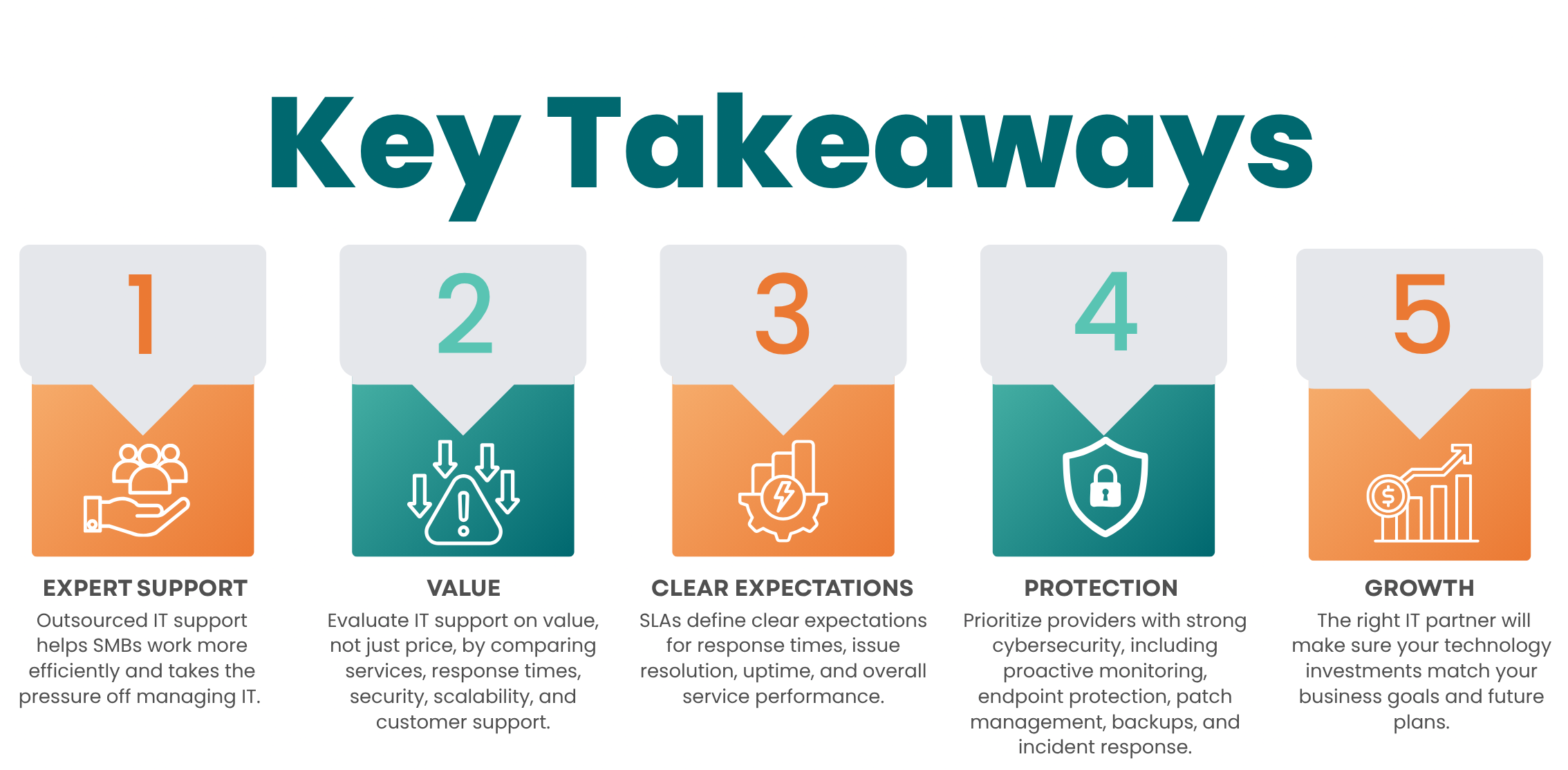
That’s why many small and mid-sized businesses are turning to outsourced IT support in 2026. Partnering with a managed services provider (MSP) gives organizations access to experienced IT professionals, proactive maintenance, and enterprise-grade technology resources without the expense of building a large internal IT department.
Key benefits of outsourced IT support include:
- Lower and more predictable IT operating costs
- Access to experienced IT specialists and technical expertise
- 24/7 monitoring and responsive technical support
- Stronger cybersecurity protection and risk management
- Faster issue resolution and reduced downtime
- Improved business continuity and disaster recovery readiness
- Scalable IT services that grow alongside the business
For many organizations, outsourced IT support is more than a cost-saving measure. It is a strategic investment that helps improve operational efficiency, strengthen security, and ensure employees have the technology support they need to stay productive. Providers often help businesses balance daily IT demands with longer-term technology planning, allowing internal teams to focus on initiatives that drive growth and innovation.
Evaluate the Scope of Managed IT Services
One of the most important steps in evaluating outsourced IT support is understanding exactly what services are included. Not all managed service providers (MSPs) offer the same level of coverage, and comparing service offerings early in the process can help businesses identify the providers that best fit their needs. It also makes it easier to evaluate pricing by ensuring you’re comparing similar services and support levels.
The best outsourced IT support providers typically offer a comprehensive suite of managed IT services designed to support daily operations, minimize downtime, and strengthen security. The following breakdown will serve as a guide to assist in evaluating your outsourced IT support:
Employees rely on technology to perform their jobs, so timely technical assistance is essential. A strong help desk should provide fast, reliable support for issues involving software, hardware, printers, user accounts, connectivity, and everyday troubleshooting.
Proactive monitoring helps identify and resolve potential issues before they impact business operations. Continuous monitoring, system updates, and preventive maintenance can reduce downtime and improve overall system reliability.
Reliable network performance is critical for productivity and security. Managed IT providers should be capable of monitoring and maintaining routers, switches, wireless networks, VPN connections, and internet infrastructure to ensure optimal performance.
As more businesses adopt cloud-based technologies, providers should offer support for platforms such as Microsoft 365, Google Workspace, cloud storage solutions, and cloud migrations. Cloud services should also include security measures, user management, and ongoing optimization.
Every device connected to your network creates both an opportunity and a security responsibility. Effective endpoint management includes monitoring, patching, updating, and securing desktops, laptops, tablets, and mobile devices to help maintain performance and reduce risk.
Data loss can occur because of ransomware attacks, hardware failures, accidental deletions, or natural disasters. Robust backup and disaster recovery solutions help businesses restore critical data quickly, minimize downtime, and maintain business continuity during unexpected events.
Cybersecurity should be a core component of any outsourced IT support agreement. Leading providers offer layered security services designed to protect users, devices, and business data from evolving threats.
Key cybersecurity services often include:
- Endpoint protection
- Patch management
- Email security
- Multi-factor authentication (MFA)
- Threat detection and response
- Security awareness training
- Vulnerability assessments
- Security monitoring and reporting
These services help reduce cyber risks, strengthen compliance efforts, and improve an organization’s overall security posture.
Questions to Ask Potential Providers
When comparing managed IT service providers, consider asking:
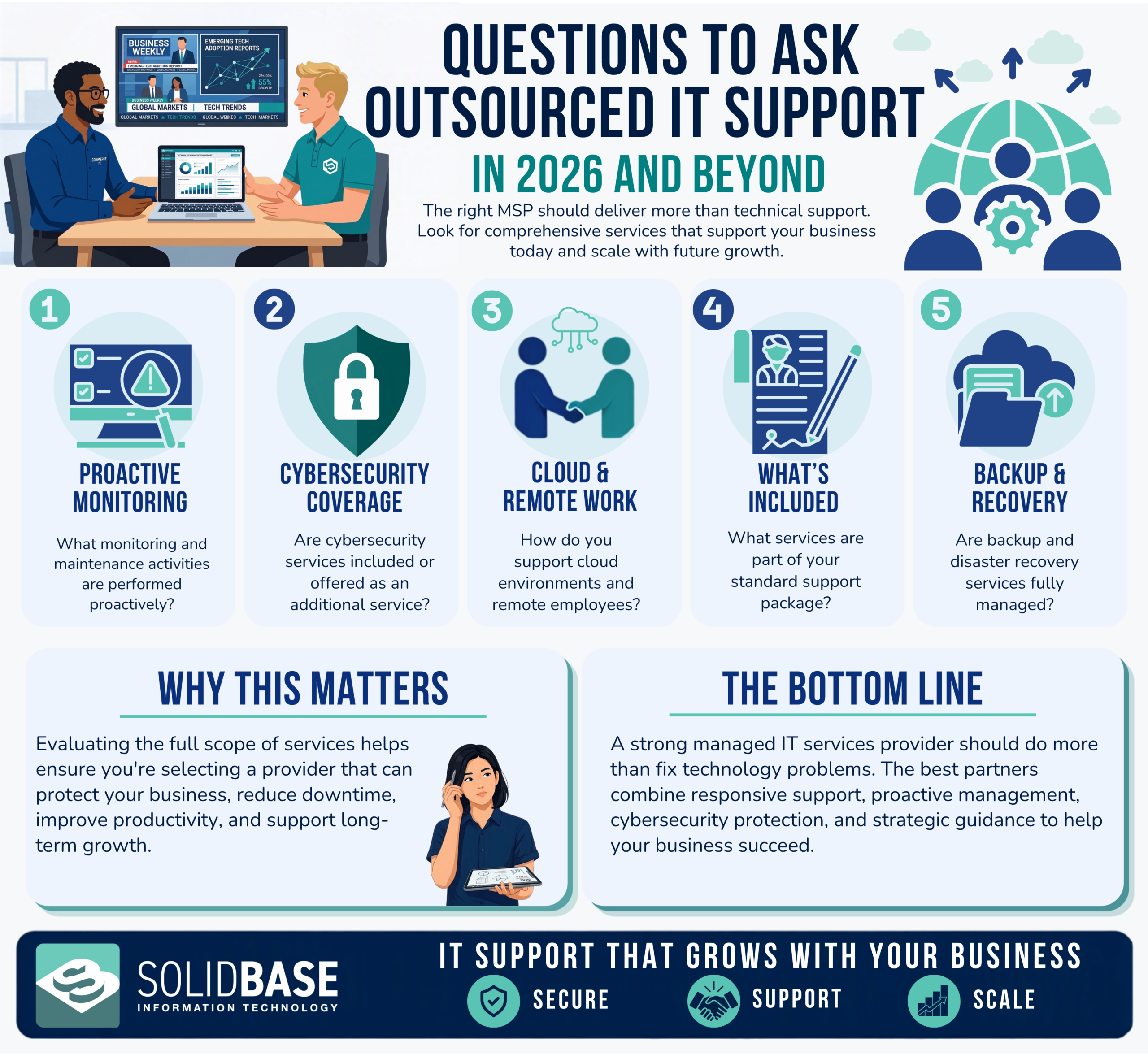
- Which services are included in your standard support package?
- Are cybersecurity services included or offered as an additional service?
- How do you handle cloud environments and remote work support?
- What monitoring and maintenance activities are performed proactively?
- Are backup and disaster recovery services fully managed?
Providers such as Solid Base IT and other experienced MSPs typically focus on delivering a combination of responsive support, proactive management, and cybersecurity protection. Evaluating the full scope of services ensures you’re selecting a partner that can support your business today while helping you prepare for future growth.
Why This Matters
The broader and more strategic a provider’s service offering, the more value they can deliver over time. A comprehensive managed IT services plan helps businesses improve efficiency, enhance security, reduce downtime, and create a technology foundation that supports long-term success.
Understand the Pricing Model
Outsourced IT support providers use different pricing models, making it important to understand how costs are structured before making a decision. Once you’ve identified the services your business needs, comparing pricing models can help you determine which provider offers the best balance of value, flexibility, and long-term support.
Common Managed IT Services Pricing Models
Per User
With the per-user model, businesses pay a fixed monthly fee for each employee receiving support. This approach works well for organizations where employees use multiple devices, applications, and cloud services throughout the day.
Per Device
The per-device model charges based on the number of managed devices, such as desktops, laptops, servers, and mobile devices. This option is often a good fit for businesses that use shared workstations, specialized equipment, or have fewer employees than devices.
Tiered Service Plans
Many managed service providers (MSPs) offer tiered support packages that include varying levels of service. Higher-tier plans typically provide additional features, enhanced cybersecurity protections, faster response times, and more proactive support.
Custom Pricing
Some organizations have unique technology environments or industry-specific requirements that require a tailored approach. In these cases, providers may offer customized pricing based on company size, infrastructure complexity, compliance needs, and support requirements.
When comparing providers, look beyond the monthly price and understand exactly what’s included. Evaluate whether services such as project work, cybersecurity tools, backup and disaster recovery, on-site support, strategic consulting, and after-hours assistance are included in the agreement. The lowest-cost option isn’t always the best value if it leaves your business exposed to additional costs, security gaps, or service limitations down the road.
Evaluate Provider Experience and Industry Expertise
Experience matters when choosing an outsourced IT support provider. While services and pricing are important, a provider’s background can have a significant impact on the quality of support and guidance your business receives.
Look for providers that:
- Have experience supporting businesses similar to yours
- Understand your industry’s technology and compliance requirements
- Can provide client references and success stories
- Employ certified IT professionals
- Demonstrate expertise in cybersecurity, cloud services, and business technology strategy
Providers with relevant industry experience can often diagnose issues more quickly, recommend practical solutions, and help organizations avoid common technology challenges. Companies such as Solid Base IT, for example, often work with businesses to align IT support with both operational needs and long-term goals, leveraging industry knowledge to deliver more strategic value.
Questions to Ask
- Have you worked with organizations in our industry?
- What certifications do your technicians hold?
- Can you provide client references or case studies?
- How do you stay current with evolving technology and cybersecurity threats?
Consider Scalability and Future Growth
Technology needs rarely stay the same. As your business grows, your IT support requirements will likely evolve as well. That’s why it’s important to choose a provider that can scale alongside your organization.
A reliable outsourced IT support provider should be able to support:
- Business expansion and new office locations
- Hybrid and remote workforce initiatives
- Cloud migration and cloud optimization
- Increased cybersecurity requirements
- New software implementations
- Infrastructure upgrades
- Digital transformation projects
Selecting a provider with growth capabilities helps ensure your IT strategy can adapt to changing business needs without requiring a complete change in technology partners.
Why Scalability Matters
The right IT provider doesn’t just solve today’s problems. They help prepare your business for tomorrow’s opportunities by building a technology foundation that supports growth, flexibility, and innovation.
Common Mistakes to Avoid
Choosing an outsourced IT support provider is an important decision, and avoiding common mistakes can help reduce risk and improve long-term outcomes.
Be cautious of providers when:
- Cost is the primary deciding factor
- Service Level Agreements (SLAs) are unclear or missing
- Cybersecurity services are treated as optional add-ons
- References and client reviews are not verified
- Contracts contain hidden fees or restrictive terms
- The provider lacks the resources to support future growth
Taking the time to carefully evaluate your options can help you avoid costly surprises and establish a stronger, more productive IT partnership.
Final Summary
Choosing the right outsourced IT support provider requires more than comparing prices or service packages. Businesses should evaluate managed IT services, cybersecurity capabilities, SLAs, communication practices, industry expertise, pricing structures, and long-term scalability to ensure they select a provider that can support both current operations and future growth.
By taking a structured approach to evaluating IT support providers, small and mid-sized businesses can reduce technology risks, maximize the value of managed IT services, and make more informed technology decisions. The right partner can help strengthen cybersecurity, improve productivity, support digital transformation, and position your organization for continued success in 2026 and beyond.
Key Takeaway
The best outsourced IT support providers do more than resolve technical issues. They become trusted technology partners that help businesses improve efficiency, reduce risk, and align IT investments with long-term business objectives.
Frequently Asked Questions
The management and upkeep of a company’s IT systems by a third party is known as outsourced IT support. In order to boost productivity and lower IT expenses, services usually include help desk support, network monitoring, cybersecurity, cloud management, backup, and continuous technical support.
Evaluate an outsourced IT support provider by comparing its service options, Service Level Agreements (SLAs), cybersecurity capabilities, pricing, industry experience, customer support, and scalability. A structured IT support evaluation helps businesses select a provider that fits their business and long-term needs.
Help desk support, remote monitoring, network management, cloud services, endpoint management, backup and disaster recovery, and comprehensive cybersecurity should all be provided by a reputable outsourced IT support provider. Businesses can maintain dependable and safe IT operations with the aid of these managed IT services.
Service level agreements (SLAs) specify the expected level of IT support, including response times, resolution targets, uptime guarantees, and support availability. Clear SLAs improve accountability and assist companies in assessing the performance of their managed IT provider.
A managed IT provider should offer cybersecurity services such as endpoint protection, patch management, firewall management, threat detection, multi-factor authentication (MFA), backup and disaster recovery, vulnerability management, and incident response to help protect business systems and data.
Outsourced IT support helps businesses reduce IT costs, improve cybersecurity, gain access to experienced IT professionals, limit downtime, and scale technology services as the business grows. It also allows internal teams to concentrate on strategic initiatives instead of day-to-day IT management.

- Auxis: 6 IT Outsourcing Trends Impacting 2026 and Beyond
- IBM: What is an SLA (service level agreement)?
- Cyberlink ASP: From IT Vendor to Strategic MSP: What Growing Businesses Really Need from Their Technology Partner
- ConnectWise: What are managed IT services?
- SalesForce: 10 Common Pricing Models: A Complete Guide
- FlairsTech: Mistakes to Avoid When Choosing an IT Help Desk Outsourcing Provider