

Choosing the right IT support company is an important decision for any growing business. Technology drives daily operations, productivity, and security, making the right IT partner a valuable part of long-term success. Beyond resolving technical issues, a dependable provider helps protect data, support employees, reduce downtime, and ensure your technology can scale with your business.
As organizations grow, IT management becomes more complex. Additional employees, devices, applications, locations, and cybersecurity requirements can quickly increase the demands on internal resources. While some businesses require fully managed IT services, others may only need specialized expertise, strategic guidance, or additional support for their existing IT team.
When evaluating IT support providers, look beyond basic troubleshooting. Consider their service offerings, technical expertise, cybersecurity capabilities, response times, industry experience, pricing structure, and ability to support future growth. The best IT support companies act as strategic partners, helping businesses improve efficiency, strengthen security, and plan for evolving technology needs.
For many growing organizations, partnering with an experienced provider such as Solid Base IT provides access to proactive support, specialized expertise, and scalable technology solutions. The right IT partner should not only meet your current needs but also help position your business for future growth and success.
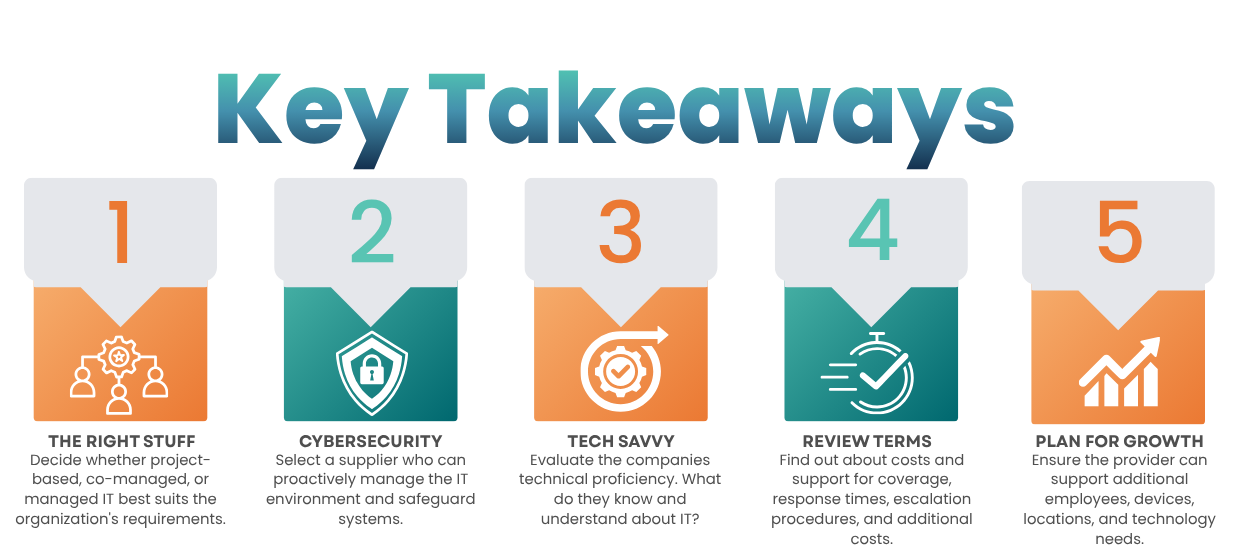
1. Choose the Right IT Support Model
The first step is identifying how much IT support your business needs and what level of expertise is required.
Managed IT Services
Best for businesses that want an external provider to handle ongoing IT management and support.
Benefits include:
- Help desk support
- Network monitoring
- Cybersecurity management
- Device maintenance
- Technology planning
Co-Managed IT Services
Ideal for organizations that already have an internal IT team but need additional support or specialized expertise.
Common areas of support include:
- Cybersecurity
- Compliance
- Cloud solutions
- IT projects
- Network management
Project-Based IT Support
A good option for businesses with one-time technology initiatives.
Examples include:
- Cloud migrations
- Network upgrades
- Security assessments
- Infrastructure projects
Key Takeaway: Choose the IT support model that best aligns with your internal resources, technology needs, and business goals.
2. Look for Proactive IT Support
The best IT support companies do more than fix problems after they occur. They work proactively to prevent issues before they impact your business.
Look for providers that offer:
- System monitoring
- Regular maintenance
- Security updates
- Data backup management
- Performance optimization
- Problem prevention
A proactive approach helps reduce downtime, improve productivity, and strengthen security.
Key Takeaway: Great IT support focuses on preventing problems, not just responding to them.
3. Evaluate Technical Expertise
Modern businesses rely on a wide range of technologies. Your IT provider should have experience supporting the tools and systems your organization uses every day.
Key areas of expertise to evaluate include:
- Network management
- Cloud services
- Cybersecurity
- Endpoint management
- Infrastructure support
- Microsoft 365
- IT project management
A knowledgeable provider can help solve issues faster and support future technology growth.
Key Takeaway: Make sure your IT partner has proven experience with your technology environment.
4. Check Cybersecurity Capabilities
Cybersecurity should be one of the most important factors when choosing an IT support company.
Look for providers that offer:
- Security monitoring
- Vulnerability assessments
- Threat detection
- Incident response
- Compliance support
- Security planning
- Endpoint protection
Businesses in regulated industries should pay particular attention to a provider’s security expertise.
Solid Base IT’s cybersecurity services help businesses identify vulnerabilities, reduce risk, and strengthen their overall security posture.
Key Takeaway: Strong cybersecurity support helps protect your business from evolving cyber threats.
5. Evaluate Network Management Services
A reliable network is essential for employee productivity and business operations.
Look for IT providers with expertise in:
- Network design
- Wi-Fi optimization
- Firewall management
- Network security
- Performance monitoring
- Infrastructure upgrades
- Multi-location connectivity
As your business grows, your network should be able to scale with additional users, devices, and applications.
Solid Base IT’s Managed Network Services help organizations improve network performance, security, and long-term scalability.
Key Takeaway: Your IT provider should be able to support your network today and as your business grows.
6. Review Pricing and Service Agreements
Price is important, but understanding exactly what is included is even more important.
Before signing an agreement, review:
- Included services
- Monthly support costs
- Additional fees
- Project pricing
- Response times
- After-hours support
- Contract terms
- Cancellation policies
A clear agreement helps prevent unexpected costs and sets expectations for both parties.
Key Takeaway: Focus on value, service quality, and transparency, not just the lowest price.
7. Verify Industry Experience
Different industries have unique technology, security, and compliance requirements.
Ask whether the provider has experience supporting organizations similar to yours.
Examples include:
- Healthcare
- Manufacturing
- Supply chain operations
- Technology and SaaS companies
- Warehousing and logistics
Solid Base IT works with organizations across multiple industries and understands the unique challenges businesses face in highly connected environments.
Key Takeaway: Industry-specific experience can lead to faster solutions and better technology recommendations.
8. Review the Onboarding and Support Process
A smooth onboarding process sets the foundation for a successful IT partnership.
Ask prospective providers how they handle:
- Technology assessments
- Documentation
- Security reviews
- Existing IT issues
- User accounts
- Device inventory
- Administrative access
- Transition planning
You should also understand:
- How employees request support
- Response expectations
- Escalation procedures
- Emergency support processes
Key Takeaway: A structured onboarding process helps ensure a seamless transition and ongoing support experience.
9. Consider Co-Managed IT for Internal Teams
Businesses with internal IT staff do not have to choose between managing everything themselves or outsourcing completely.
Co-managed IT allows organizations to supplement their internal team with outside expertise.
Common areas where co-managed IT can help include:
- Cybersecurity
- Cloud projects
- Monitoring and maintenance
- Compliance initiatives
- Documentation
- Infrastructure management
- Strategic IT planning
This approach allows internal teams to focus on business priorities while leveraging specialized expertise when needed.
Learn more about Solid Base IT’s Co-Managed IT Services.
Key Takeaway: Co-managed IT provides flexibility, additional resources, and specialized support without replacing your internal team.
10. Plan for Long-Term Scalability
Your technology needs will change as your business grows. The right IT provider should be able to scale with you.
Consider whether the provider can support:
- Additional employees
- More devices
- Multiple locations
- New applications
- Larger networks
- Increased security requirements
- Expanded cloud adoption
Choosing a scalable IT partner can help you avoid disruptive provider changes later.
Key Takeaway: Select an IT support company that can support your business today and grow alongside you tomorrow.
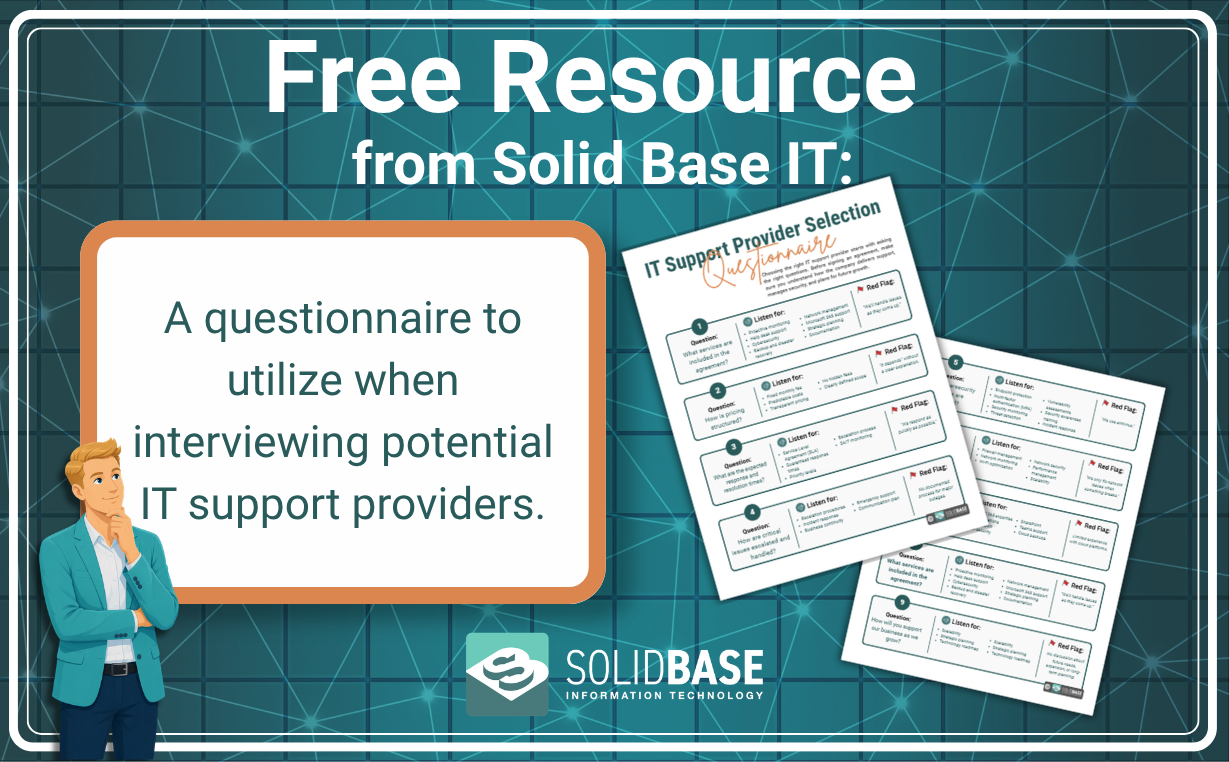
Questions to Ask Before Hiring an IT Support Company
Choosing the right IT support provider starts with asking the right questions. Before signing an agreement, make sure you understand how the company delivers support, manages security, and plans for future growth.
Consider asking:
- What services are included in the agreement?
- How is pricing structured?
- What are the expected response and resolution times?
- How are critical issues escalated and handled?
- What cybersecurity services are included?
- Can the provider manage and secure our network?
- Do they support cloud platforms such as Microsoft 365?
- What does the onboarding process look like?
- Can they work alongside an internal IT team?
- How will they support our business as it grows?
The answers to these questions can help you determine whether the provider is a good long-term fit for your organization.
Check out our free download below! In the PDF you will find these questions written in a format that makes it easy to interview companies you are considering hiring.
Why Consider Solid Base IT?
Solid Base IT helps businesses simplify technology management through a range of IT services designed to support growth, security, and operational efficiency.
Services include:
- Managed IT Services
- Co-Managed IT Services
- Cybersecurity Solutions
- Managed Network Services
- Cloud Solutions
- IT Project Services
Whether your business needs fully managed IT support or additional resources for an internal IT team, Solid Base IT can provide the expertise and flexibility needed to support evolving technology requirements.
Conclusion
Choosing the best IT support company involves more than comparing prices. The right provider should offer the expertise, security, responsiveness, and scalability your business needs to succeed.
When evaluating IT support providers, focus on:
- Service offerings
- Technical expertise
- Cybersecurity capabilities
- Network management
- Response times
- Pricing transparency
- Industry experience
- Scalability
A trusted IT partner should help reduce downtime, improve productivity, strengthen security, and support your long-term business goals. By taking the time to evaluate your options carefully, you can choose an IT support company that delivers value today while helping your organization prepare for tomorrow.
Frequently Asked Questions
Businesses should look for an IT provider that offers:
- The right support model for their needs
- Strong technical expertise
- Robust cybersecurity capabilities
- Transparent pricing
- Fast response times
- Reliable customer support
- Scalable solutions for future growth
The best IT support companies act as strategic partners, helping businesses improve efficiency, reduce downtime, and strengthen security.
The answer depends on your existing IT resources.
- Managed IT services are ideal for businesses that want an external provider to handle day-to-day IT operations, support, and maintenance.
- Co-managed IT services are best for organizations with an internal IT team that needs additional expertise, resources, or support for specific projects and technologies.
Many growing businesses choose co-managed IT to supplement their internal team without adding more full-time staff.
A well-defined IT support agreement should clearly outline:
- Included services
- Pricing and billing structure
- Response and resolution times
- Support hours and coverage
- Additional fees
- Contract terms
- Roles and responsibilities
- Escalation procedures
Clear expectations help prevent misunderstandings and ensure you receive the support your business needs.
Your IT provider may have access to critical systems, sensitive data, and business applications. That’s why cybersecurity should be a key part of the evaluation process.
Look for providers that offer:
- Security monitoring
- Endpoint protection
- Multi-factor authentication (MFA)
- Vulnerability assessments
- Incident response
- Employee security awareness training
Strong cybersecurity practices help reduce risk and protect your business from evolving threats.
Technology needs change as businesses grow. A scalable IT provider can continue to support your organization as you add:
- Employees
- Devices
- Office locations
- Applications
- Cloud services
- Security requirements
Choosing a provider that can grow with your business helps avoid disruptions and reduces the need to switch IT partners in the future.