

What happens when a growing business outpaces the technology systems that once worked perfectly well?
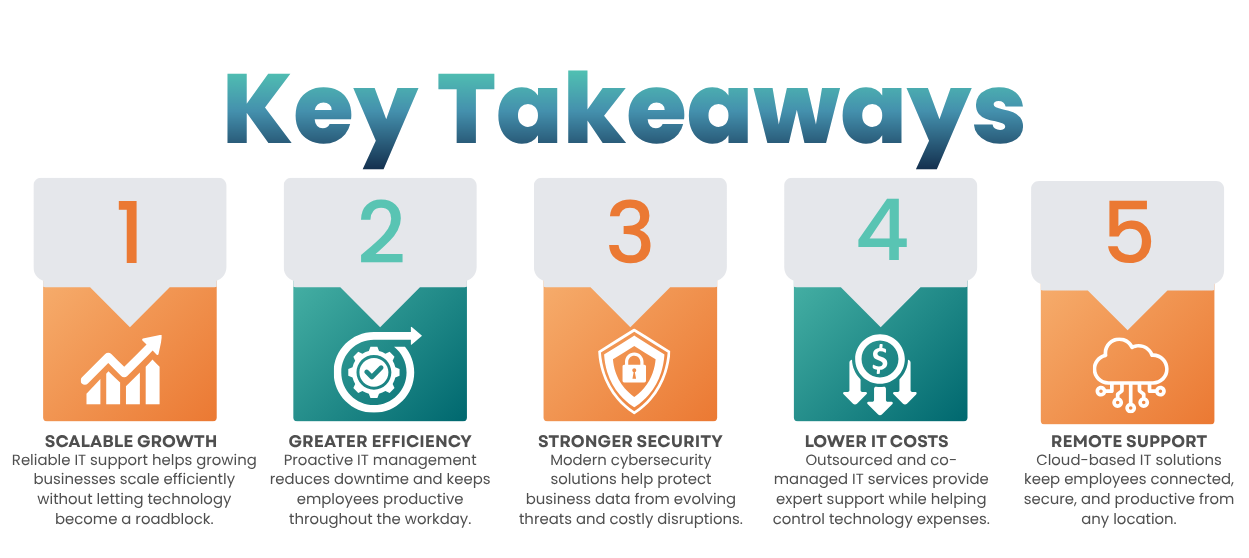
As SMBs continue to grow in 2026, reliable IT support has become essential for maintaining productivity, cybersecurity, and business continuity. Today’s businesses often operate across multiple locations, rely on cloud-based applications, and support remote or hybrid workforces. To keep pace with these evolving demands, organizations need IT systems that are secure, scalable, and capable of supporting day-to-day operations without disruption.
At the same time, many small and midsize businesses face ongoing challenges, including limited IT budgets, increasing cybersecurity threats, and growing technology complexity. To address these concerns, many organizations are turning to outsourced IT support, co-managed IT services, and multi-site IT management solutions. These approaches help streamline operations, reduce downtime, strengthen security, and create a solid foundation for long-term business growth.
When Growth Creates Technology Challenges: A Small Business Story
In early 2026, a local, growing construction and property management company had expanded from 12 employees to nearly 40 in just three years. What started as a single office operation had evolved into a business with multiple job sites, remote employees, and staff working across different locations.
At first, the company’s technology setup seemed adequate. Employees shared files through a mix of cloud applications, stored passwords in spreadsheets, and relied on a local computer expert whenever technical issues arose. As the business grew, however, these temporary solutions began creating larger problems.
Employees frequently struggled to access documents, new hires experienced delays getting set up, and recurring network issues interrupted day-to-day operations. More concerning was a phishing email that nearly resulted in a fraudulent wire transfer after an employee clicked a convincing-looking message from what appeared to be a trusted vendor.
The business owner realized that technology was no longer just a support function. It had become a critical factor in the company’s ability to operate efficiently and securely.
To address these challenges, the company partnered with an IT support provider to implement a more strategic approach. Multi-factor authentication was enabled across all business accounts, devices were centrally managed, cloud systems were standardized, and proactive monitoring was put in place to identify issues before they disrupted employees.
Within months, the company saw measurable improvements. Support requests were resolved faster, downtime decreased significantly, and employees were able to collaborate more effectively whether they were in the office, on-site, or working remotely. Management also gained greater confidence knowing their systems were backed up, monitored, and protected against evolving cyber threats.
This scenario is becoming increasingly common among growing SMBs. As organizations expand, technology often reaches a tipping point where reactive support is no longer enough. Businesses need scalable IT solutions that not only solve today’s issues but also support future growth.
At Solid Base IT, we frequently see businesses reach this stage. The companies that thrive are often those that shift from viewing IT as a cost center to viewing it as a strategic investment that improves productivity, strengthens security, and supports long-term business goals.
Why IT Support Services Matter for Small Business Growth
As small and midsize businesses continue to grow, their technology needs become increasingly complex. What may have worked for a company with a dozen employees often becomes difficult to manage as teams expand, new locations are added, and cloud-based applications become essential to daily operations.
Reliable IT support is no longer just about fixing technical issues. It plays a critical role in helping businesses improve productivity, strengthen cybersecurity, and create a stable foundation for long-term growth. For many SMBs, access to scalable IT support can mean the difference between reacting to technology challenges and proactively planning for the future.
Growing Businesses Need Scalable IT Support
As organizations grow, so do the demands placed on their technology infrastructure. Expanding teams, remote employees, cloud applications, compliance requirements, and evolving cybersecurity threats can quickly overwhelm limited internal IT resources.
Consider the construction and property management company from our earlier example, which grew from 12 employees to nearly 40 in just three years. As new employees joined, the business struggled to manage user accounts, secure devices, and provide consistent support across multiple job sites. Their local computer expert spent most of their time troubleshooting day-to-day issues, leaving little time for strategic planning or cybersecurity initiatives.
This challenge is common among growing SMBs. Scaling IT support is not simply about hiring more staff or purchasing additional hardware. It requires building a technology framework that can adapt as the business evolves.
By leveraging outsourced IT support or co-managed IT services, businesses gain access to experienced professionals, proactive monitoring, and specialized expertise without significantly increasing overhead costs. This approach helps improve system performance, maintain operational stability, and support long-term growth objectives.
Reliable IT Support Improves Employee Productivity
Technology-related disruptions can have a direct impact on employee efficiency. Slow networks, software issues, hardware failures, and delayed technical support often lead to frustration, workflow interruptions, and lost productivity.
For example, imagine an accounting firm during tax season. If employees lose access to critical applications or experience recurring technology problems, client deadlines can quickly be affected. Even minor technical issues can have a significant impact when multiplied across an entire workforce.
Reliable IT support helps businesses minimize these disruptions by resolving issues quickly, optimizing system performance, and ensuring employees have consistent access to the tools they need. As more organizations embrace remote and hybrid work models, dependable IT support also helps maintain seamless collaboration and communication regardless of employee location.
Essential IT Support Services for SMBs
Outsourced IT Support: Benefits and Considerations
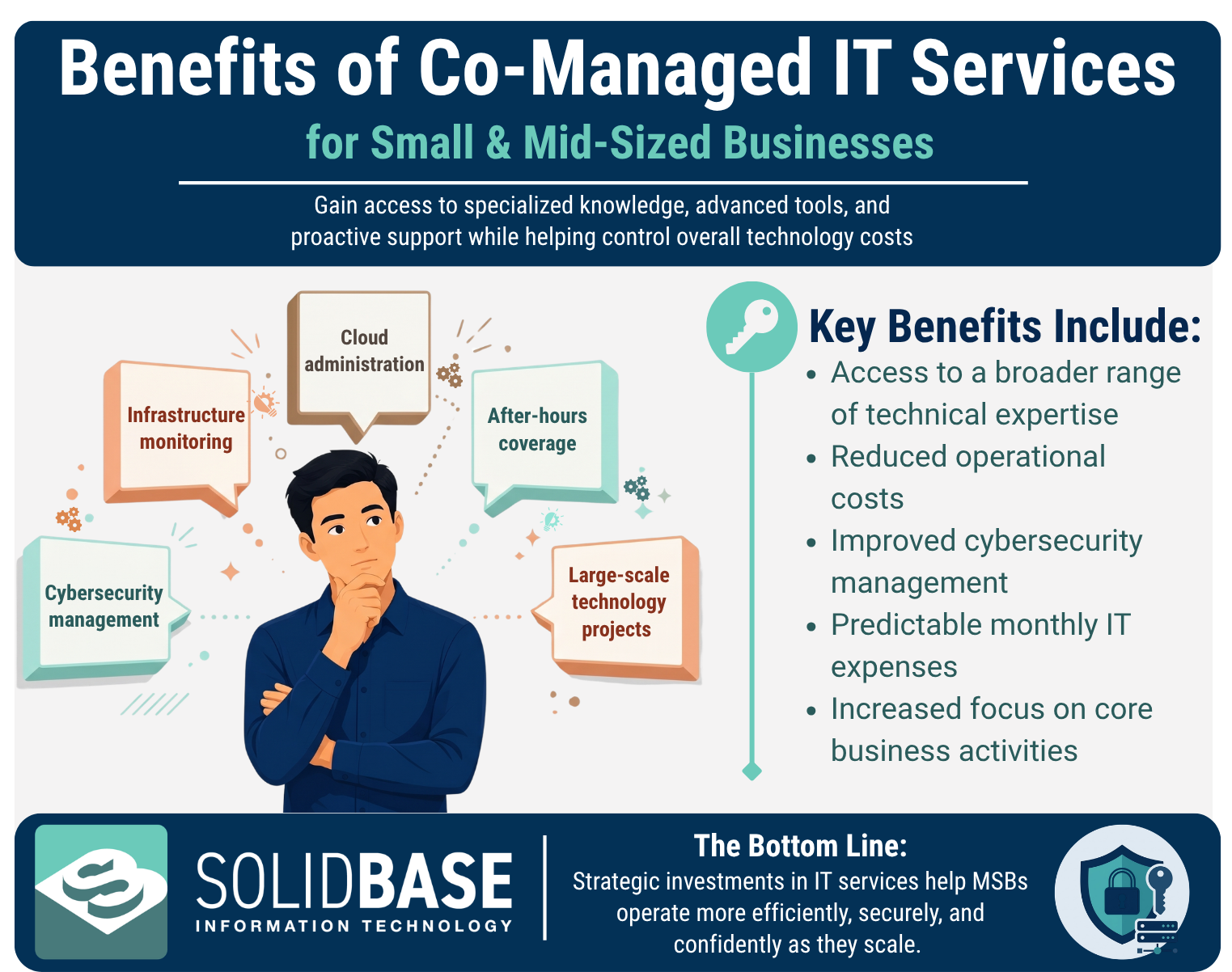
Outsourced IT support allows businesses to partner with external technology experts rather than relying solely on an internal IT team. This model can provide access to specialized knowledge, advanced tools, and proactive support while helping control overall technology costs.
Key benefits include:
- Access to a broader range of technical expertise
- Reduced operational costs
- Improved cybersecurity management
- Predictable monthly IT expenses
- Increased focus on core business activities
However, businesses should carefully evaluate potential providers to ensure they have clear communication processes, robust security standards, and experience supporting organizations of similar size and complexity.
When implemented correctly, outsourced IT support can deliver both operational efficiencies and strategic value.
When Co-Managed IT Services Make Sense
Many growing organizations find themselves in a position where their internal IT team is capable but stretched thin.
In these situations, co-managed IT services provide additional resources without replacing existing staff. Internal teams retain control of strategic initiatives while external experts assist with:
- Cybersecurity management
- Infrastructure monitoring
- Help desk support
- Cloud administration
- After-hours coverage
- Large-scale technology projects
This model is particularly valuable for businesses experiencing rapid growth, increasing technology demands, or limited internal capacity.
Supporting Multiple Locations
For businesses operating across multiple offices, locations, or job sites, maintaining consistency can be challenging.
Multi-site IT support helps standardize technology operations through:
- Centralized network management
- Consistent security policies
- Unified communication systems
- Automated backups
- Standardized software deployment
- Ongoing performance monitoring
This approach improves operational efficiency while helping ensure all locations remain secure and connected.
Key Features Every SMB Should Look for in IT Support Services
Proactive Monitoring and Maintenance
Modern IT support should focus on preventing problems before they impact business operations.
Proactive services typically include:
- Network monitoring
- Server and backup monitoring
- Patch management
- Hardware health checks
- Software updates
- Performance optimization
By identifying potential issues early, businesses can reduce downtime and improve overall system reliability.
Cybersecurity Protection
Cybersecurity remains one of the highest priorities for SMBs in 2026. Threats such as ransomware, phishing attacks, credential theft, and business email compromise continue to target organizations of all sizes.
Comprehensive IT support should include:
- Multi-factor authentication (MFA)
- Endpoint protection
- Email security solutions
- Firewall management
- Security awareness training
- Incident response planning
Strong cybersecurity support helps protect sensitive data while reducing the risk of costly disruptions.
Cloud and Remote Work Support
As remote and hybrid work environments become standard, cloud technology continues to play an essential role in business operations.
Effective IT support should include:
- Microsoft 365 administration
- Cloud migrations
- Remote device management
- Secure remote access solutions
- Collaboration platform support
- Cloud backup management
A cloud-focused IT strategy helps employees remain productive, connected, and secure regardless of where they work.
Why IT Support Matters for Lean Internal Teams
Reduces Pressure on Internal IT Staff
In many SMBs, a small IT team is responsible for cybersecurity, troubleshooting, onboarding, vendor management, compliance, and infrastructure maintenance.
As demands increase, internal teams often spend most of their time responding to support requests rather than focusing on strategic projects that drive business value.
Supplementing internal resources with outsourced or co-managed IT support allows IT personnel to concentrate on business initiatives such as digital transformation, process improvements, and technology planning.
Improves Service Availability
Technology problems rarely occur at convenient times.
Partnering with a managed services provider can help organizations improve:
- Ticket response times
- Monitoring coverage
- After-hours support availability
- Disaster recovery readiness
- Business continuity planning
As businesses grow, consistent support becomes essential for maintaining productivity and minimizing operational disruptions.
Final Thoughts
In today’s increasingly digital business environment, IT support has evolved into a critical component of business success. From cybersecurity and cloud management to employee productivity and business continuity, technology directly impacts an organization’s ability to grow and compete.
Whether through outsourced IT support, co-managed IT services, or a comprehensive managed services strategy, growing SMBs benefit from scalable solutions that align with their business objectives.
At Solid Base IT, we’ve seen firsthand how proactive technology management helps businesses reduce downtime, improve security, and create a stronger foundation for sustainable growth. The most successful organizations don’t view IT support as simply fixing problems. They view it as a strategic investment that helps their business operate more efficiently, securely, and confidently as they scale.
Frequently Asked Questions
The biggest benefit is improved business continuity. Professional IT support helps reduce downtime, strengthen cybersecurity, and ensure employees have reliable access to technology.
Businesses should consider outsourcing IT support when internal resources can no longer efficiently handle daily support needs, cybersecurity responsibilities, and technology planning.
Co-managed IT services combine the expertise of an external IT provider with an organization’s internal IT team, providing additional support, monitoring, and specialized knowledge.
Reliable IT support reduces technical disruptions, resolves issues quickly, and ensures employees can consistently access the tools and systems they need to perform their jobs effectively.
IT support is important because it helps businesses maintain system stability, reduce downtime, improve productivity, and strengthen cybersecurity as technology environments become more complex.
Firewalls, endpoint security, multi-factor authentication, system monitoring, patch management, and security awareness training are all ways that IT support enhances cybersecurity.
SMBs should assess provider experience, response time, service coverage, cybersecurity capabilities, scalability, communication quality, and alignment with business needs.

- How to Choose the Best IT Support Company
- How to Evaluate Outsourced IT Support in 2026
- Co-Managed IT Support: Small and Mid-sized Business (SMB) Teaming Guide
- 7 Questions to Ask IT Support Providers in Utah
- 7 Signs Your Business Has Outgrown Internal IT Support
- Best IT Support for Multi-Site Mid-Sized Firms
- Everything You Need to Know About Small Business IT