

Managing technology across multiple business locations is far more complex than supporting a single office. As organizations grow, they must maintain consistent IT operations, strengthen cybersecurity, support both remote and on-site employees, and meet regulatory requirements without creating additional operational challenges.
Consider a growing medical aesthetics provider that expanded from one successful clinic to several locations across multiple states. What once worked for a single office quickly became difficult to manage at scale. Different locations began using different technology configurations, employees needed secure access from various locations, and leadership lacked visibility into IT performance across the organization. The business needed a way to standardize technology, improve security, and support continued growth without increasing complexity.
Many growing businesses face similar challenges. At Solid Base IT, we’ve seen organizations reach a point where managing technology independently at each location is no longer sustainable. As additional sites, users, devices, and cybersecurity requirements are introduced, businesses often need a more centralized and strategic approach to IT management.
This is where multi-site managed IT services can make a significant difference. By partnering with the right managed IT provider, small and midsize businesses (SMBs) with 50 to 500 employees can centralize IT management, improve cybersecurity, increase operational efficiency, and create a more consistent technology experience across every location.
What Are Multi-Site Managed IT Services?
Multi-site managed IT services help organizations manage technology, cybersecurity, and user support across multiple business locations through a centralized IT strategy. Rather than treating each office, clinic, or branch as a separate technology environment, businesses can implement consistent IT standards, security policies, and support processes across the entire organization.
For the medical aesthetics provider mentioned above, growth created technology inconsistencies between locations. New clinics were opened at different times, devices were configured differently, and support processes varied from site to site. As a result, managing technology became more complicated with every new location added.
This is a common challenge for expanding organizations. At Solid Base IT, we frequently work with businesses that have outgrown the systems and processes that supported them during their early growth stages. What works for one office often becomes difficult to manage across five, ten, or more locations.
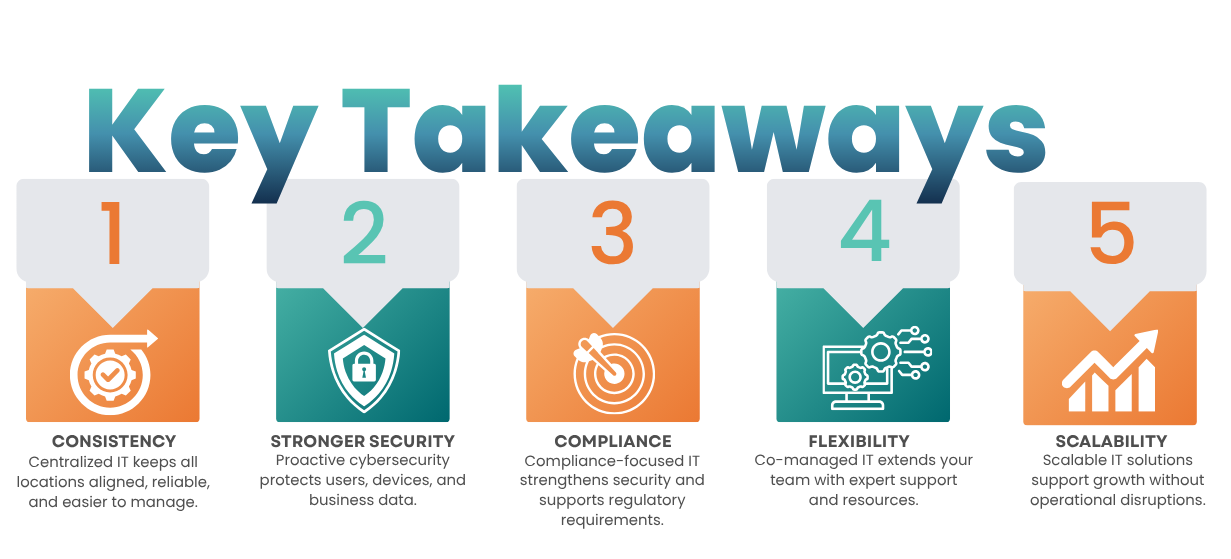
A multi-site managed IT provider helps solve these challenges by creating a standardized approach to technology management. This often includes centralized device management, cloud-based infrastructure, unified cybersecurity controls, consistent software deployment, and organization-wide support processes. With the right strategy in place, leadership gains greater visibility into IT operations while employees receive the same reliable experience regardless of where they work.
For growing organizations, multi-site managed IT services provide a scalable foundation that supports expansion, strengthens cybersecurity, simplifies day-to-day operations, and ensures technology remains aligned with business goals as new locations are added. Solid Base IT helps businesses build that foundation through proactive IT management, strategic guidance, and ongoing support designed to scale alongside growth.
Why Do Multi-Site SMBs Need Specialized IT Support?
As businesses expand into multiple locations, managing technology becomes significantly more complex. What works for a single office often becomes difficult to maintain across several locations, especially when different teams, devices, and systems are involved. Without a centralized IT strategy, businesses can end up with inconsistent software versions, varying security practices, and limited visibility into technology performance.
The growing medical aesthetics provider introduced earlier experienced these challenges as it expanded into new markets. Each location had slightly different technology configurations, making support more time-consuming and increasing operational risk. Standardizing IT across all clinics helped create a more consistent experience for both employees and patients while reducing administrative overhead.
Multi-site businesses also face a larger cybersecurity footprint. Every office, employee device, remote connection, and cloud application creates another potential entry point for cyber threats. As organizations grow, proactive cybersecurity measures become essential to protecting sensitive data, maintaining business continuity, and reducing risk across the entire organization.
Reliable IT support is equally important for today’s distributed workforce. Employees may work across multiple offices, from home, or while traveling between locations. They need secure, dependable access to business systems regardless of where they are. A multi-site managed IT provider helps ensure users remain productive while maintaining strong security controls.
At Solid Base IT, we often help growing organizations create scalable IT environments that support expansion without sacrificing performance, security, or user experience. With the right technology foundation in place, businesses can open new locations, onboard new employees, and adopt new technologies with confidence.
What to Look for in a Multi-Site Managed IT Provider
Choosing the right managed IT provider is one of the most important decisions a growing business can make. A provider should not only support your current operations but also help you build a secure, scalable technology strategy that supports future growth.
Standardized IT Management
Effective multi-site IT management starts with consistency. A qualified managed IT provider should establish standardized processes, configurations, and support procedures across every location. This creates a more predictable technology environment and simplifies day-to-day operations.
For the multi-location medical aesthetics provider, standardizing technology across clinics eliminated many of the inefficiencies caused by inconsistent device configurations and software management practices. Employees received the same technology experience regardless of location, while leadership gained greater visibility into IT operations.
Key capabilities often include:
- Centralized device management
- Standardized software deployment
- Unified security policies
- Centralized reporting and monitoring
- Consistent user access controls
When every location follows the same technology standards, businesses can resolve issues faster, improve operational efficiency, and scale more effectively.
Active Cybersecurity
Cybersecurity should be embedded into daily IT operations rather than treated as a separate initiative. As organizations add locations and users, their attack surface naturally expands, making proactive security measures increasingly important.
A strong managed IT provider delivers layered cybersecurity protections designed to identify and address threats before they impact business operations. This includes continuous monitoring, endpoint protection, vulnerability management, threat detection and response, security awareness training, and routine system updates.
For organizations handling sensitive information, such as healthcare providers, financial firms, or legal practices, proactive cybersecurity helps reduce risk, strengthen compliance efforts, and protect business-critical systems.
At Solid Base IT, cybersecurity is integrated into every aspect of technology management because protecting business operations requires more than simply responding to incidents after they occur.
Compliance Support
Businesses operating in regulated industries must balance growth with increasingly complex compliance requirements. Whether your organization is subject to HIPAA, PCI-DSS, FTC Safeguards Rule requirements, or other regulatory standards, compliance requires ongoing attention and consistent processes.
As the medical aesthetics organization expanded into multiple locations, maintaining HIPAA compliance became a growing concern. Leadership needed confidence that patient data remained protected regardless of where employees worked or which clinic they supported.
A managed IT provider can help organizations strengthen compliance through:
- Access control management
- Security policy implementation
- Documentation and reporting
- Regular system updates
- Risk assessments
- Security monitoring and auditing support
By taking a proactive approach, businesses can reduce risk, improve security posture, and remain better prepared for compliance reviews and audits.
Scalable Infrastructure
Technology should support business growth, not limit it. As companies add locations, employees, applications, and services, their infrastructure must be able to scale without disrupting operations.
A strong multi-site IT partner helps businesses build flexible environments that adapt to changing needs. This may include cloud migration strategies, network expansion, device management programs, software integrations, and business continuity planning.
For growing organizations, scalability means being able to open a new office or clinic without rebuilding IT processes from scratch. A standardized, well-managed infrastructure makes expansion faster, more predictable, and less disruptive.
How Does Co-Managed IT Benefit Lean Internal Teams?
Many growing businesses rely on small internal IT teams to support increasingly complex technology environments. While these teams often understand the business exceptionally well, they may not have the time or resources required to handle every aspect of IT management as the company expands.
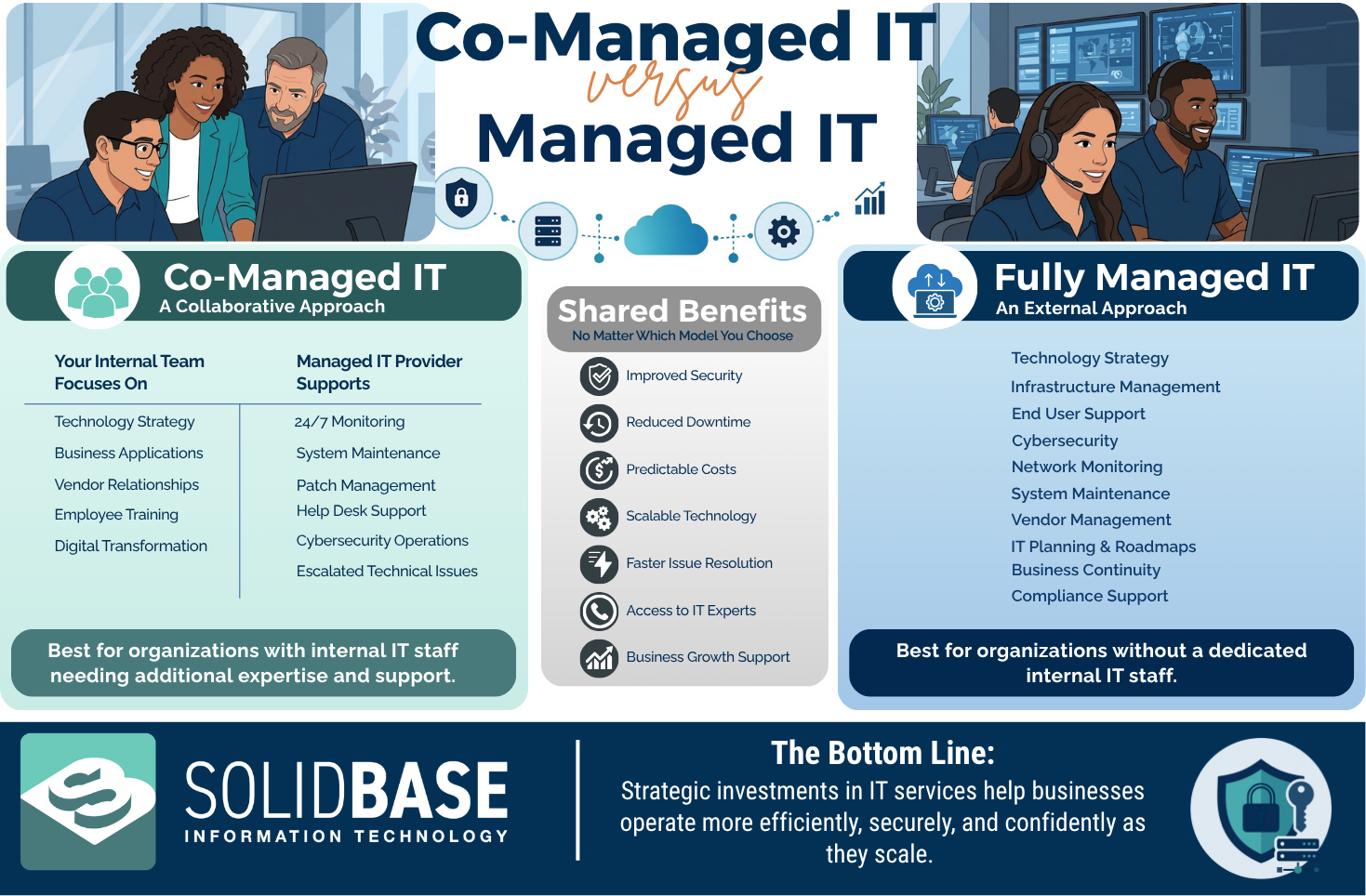
Co-managed IT services provide additional expertise and operational support while allowing internal IT leaders to maintain strategic control.
For example, the medical aesthetics provider’s internal IT lead was spending much of his time responding to support requests and addressing routine technology issues. By leveraging a co-managed IT approach, routine operational responsibilities could be shared, allowing internal resources to focus on business initiatives that directly supported growth.
Internal Teams Often Concentrate On
- Technology strategy
- Business application oversight
- Vendor relationships
- Employee training
- Digital transformation initiatives
The Managed IT Provider Supports
- 24/7 monitoring
- System maintenance
- Patch management
- Help desk services
- Cybersecurity operations
- Escalated technical issues
This collaborative approach improves efficiency, strengthens security, and allows businesses to maximize the value of their internal IT resources.
Why Do 24/7 Monitoring and Patch Management Matter?
Technology issues don’t always occur during business hours. A network outage, security incident, hardware failure, or system performance issue can develop at any time and quickly affect multiple locations.
That’s why 24/7 monitoring is a critical component of multi-site managed IT services.
Continuous monitoring helps identify and address potential issues before they become larger business disruptions. By monitoring networks, devices, servers, and critical systems around the clock, businesses can reduce downtime, improve performance, and maintain a more reliable technology environment.
For the growing medical aesthetics organization, proactive monitoring provided greater visibility into technology health across every location. Potential issues could be identified and resolved before impacting patient scheduling, administrative operations, or employee productivity.
Patch management is another essential component of a healthy IT environment. Cybercriminals frequently target known software vulnerabilities that remain unpatched. Regular updates help close these security gaps while improving system stability and performance.
Comprehensive patch management includes:
- Operating system updates
- Security patches
- Application updates
- Firmware updates
- Vulnerability remediation
Together, 24/7 monitoring and patch management help organizations strengthen cybersecurity, improve reliability, and maintain consistent performance across all business locations.
Choosing the Right Multi-Site Managed IT Provider
The right managed IT provider should do more than solve technical problems. They should act as a strategic partner that helps your business operate securely, efficiently, and confidently as it grows.
When evaluating potential providers, look for the ability to:
- Standardize IT operations across multiple locations
- Deliver proactive cybersecurity and threat monitoring
- Support industry-specific compliance requirements
- Provide scalable managed and co-managed IT services
- Offer 24/7 monitoring and responsive support
- Align technology strategy with long-term business goals
Businesses with multiple locations face unique operational and security challenges that require specialized expertise. Selecting a provider with experience supporting distributed organizations can help create a stronger technology foundation while reducing the complexity often associated with growth.
At Solid Base IT, we help multi-site organizations simplify technology management, strengthen cybersecurity, and build scalable IT strategies that support long-term business success.
Conclusion
Managing technology across multiple business locations requires a thoughtful, proactive approach. As organizations grow, maintaining consistency, security, and compliance becomes increasingly important to sustaining operational efficiency and supporting future expansion.
The medical aesthetics provider highlighted throughout this article faced many of the same challenges common among growing businesses: inconsistent technology standards, increased cybersecurity risks, expanding compliance requirements, and limited IT resources. By adopting a centralized approach to technology management, the organization was able to improve visibility, standardize operations, and support continued growth more effectively.
Multi-site managed IT services help businesses bring together technology management, cybersecurity, user support, and strategic planning under a unified framework. With the right managed IT partner, organizations can reduce downtime, strengthen security, improve user experiences, and scale more confidently.
Whether you’re managing three locations or thirty, investing in a secure, scalable, and well-supported IT environment helps position your business for long-term success. Solid Base IT works alongside growing organizations to create technology strategies that not only solve today’s challenges but also support tomorrow’s opportunities.
Frequently Asked Questions
Multi-site managed IT services provide centralized IT management for businesses running across multiple offices or locations. These services include network monitoring, cybersecurity, technical support, cloud management, patch management, and infrastructure maintenance to help preserve consistent IT operations across every site.
Multi-site SMBs need managed IT services to standardize IT operations, strengthen cybersecurity, reduce downtime, and simplify technology management across multiple locations. A managed IT provider also helps businesses scale their IT infrastructure while continuing operational efficiency.
Continuous monitoring, endpoint protection, threat monitoring and response, vulnerability management, patch management, and security best practices are all ways that managed IT services enhance cybersecurity. These services help reduce security risks and protect business information and systems.
The primary distinction is that co-managed IT services add more knowledge and assistance to an organization’s internal IT team, whereas managed IT services completely outsource day-to-day IT management to an outside provider. Through this collaboration, internal teams can focus on strategic projects while the provider takes care of technical support, cybersecurity, monitoring, and maintenance.
Choose a managed IT provider that provides proactive cybersecurity, scalable infrastructure, responsive technical support, compliance assistance, and 24-hour monitoring. These features support long-term growth, lower downtime, and improved security for businesses.
Continuous monitoring helps find and address IT problems before they affect business operations, while patch management keeps operating systems and apps up to date with the latest security patches. When combined, they increase cybersecurity, decrease downtime, and improve system reliability.

- Managed IT Providers for SMBs: What Growing Businesses Should Look For
- IT Support for Growing SMBs
- How to Choose the Best IT Support Company
- How to Evaluate Outsourced IT Support in 2026
- Best IT Support for Multi-Site Mid-Sized Firms
- 7 Signs Your Business Has Outgrown Internal IT Support
- 11 Managed IT Providers for Multi Site Businesses
- What are managed IT services?
- How Co-Managed IT Services Support Lean IT Teams